《看图学统计》 — Learning Statistics Through Pictures
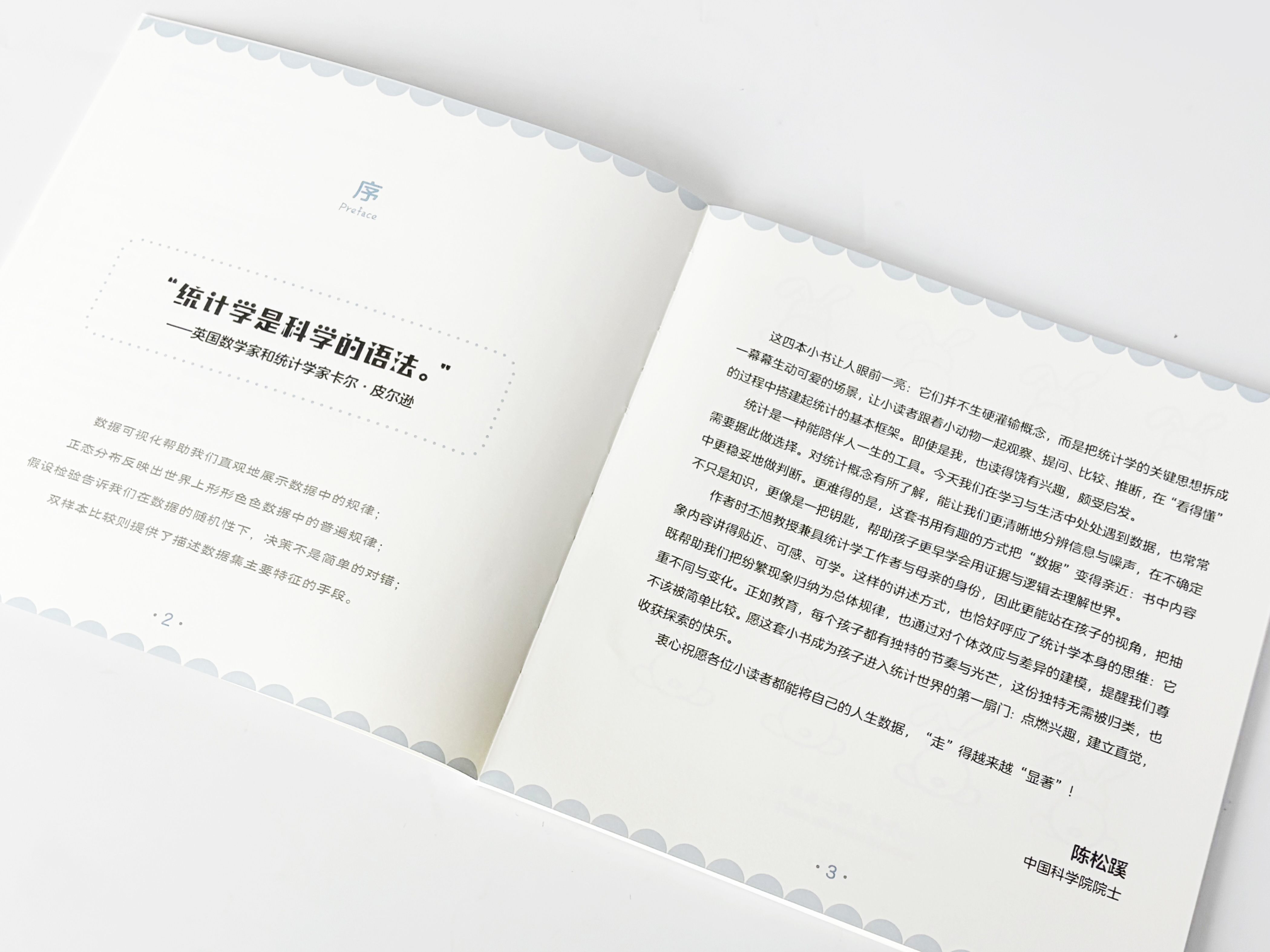
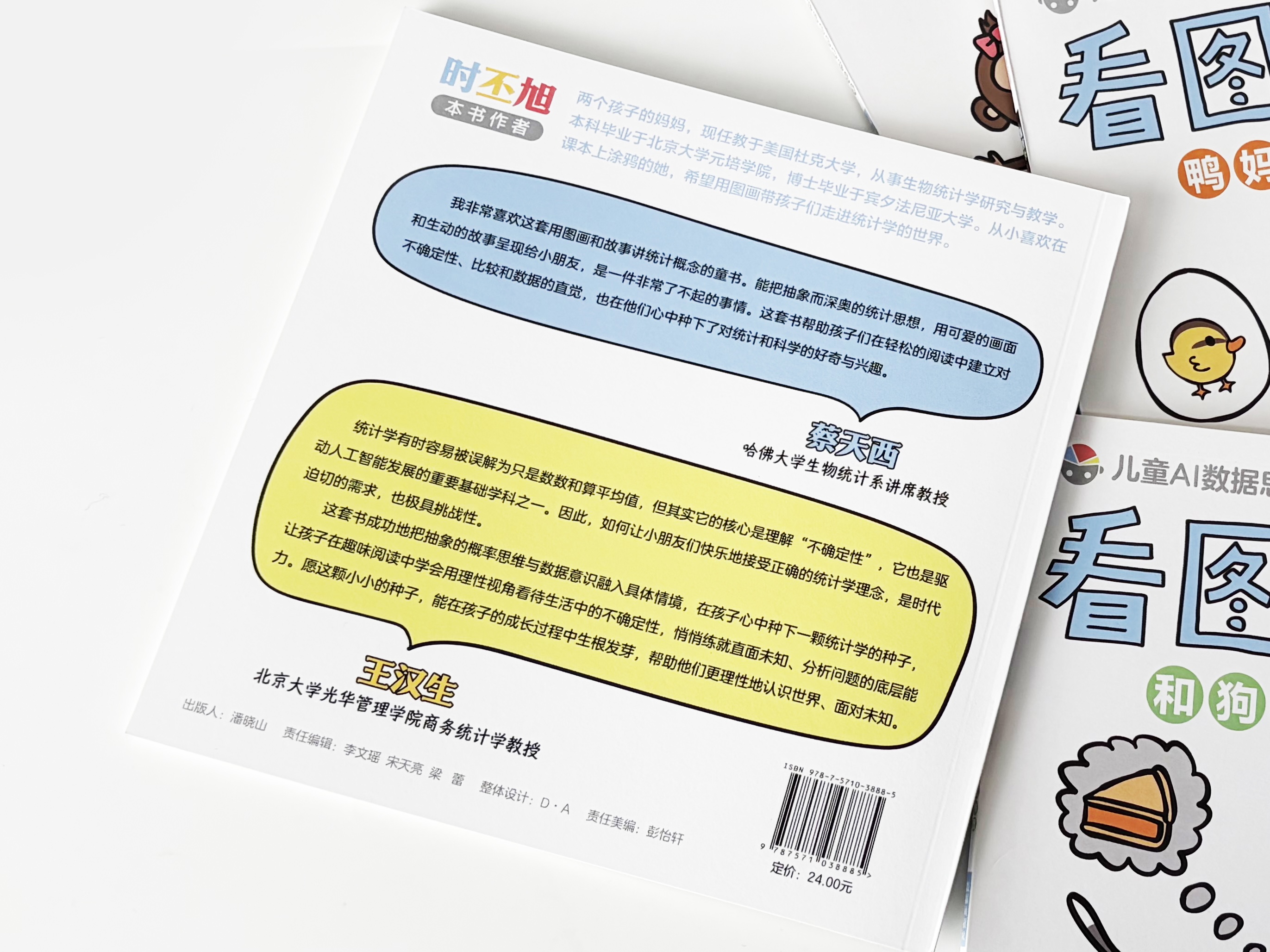
A four-book illustrated series that introduces foundational statistical ideas to kindergarten and elementary-school readers. Each volume turns one core concept into a story with friendly animal characters, with bilingual Chinese–English text throughout. Published by Hunan Science and Technology Press (湖南科学技术出版社), a leading science and technology publisher in China, in 2026. Preface by Prof. Songxi Chen, Academician of the Chinese Academy of Sciences. Endorsed by Prof. Tianxi Cai (Professor of Biostatistics at Harvard University) and Prof. Hansheng Wang (Professor of Business Statistics at Peking University).
The series was selected for China Publishing & Media Journal's (《中国出版传媒商报》) Monthly Recommended New Books list in the Children's Book category (May 2026) and featured in a full author interview across its print and digital editions (July 17, 2026).
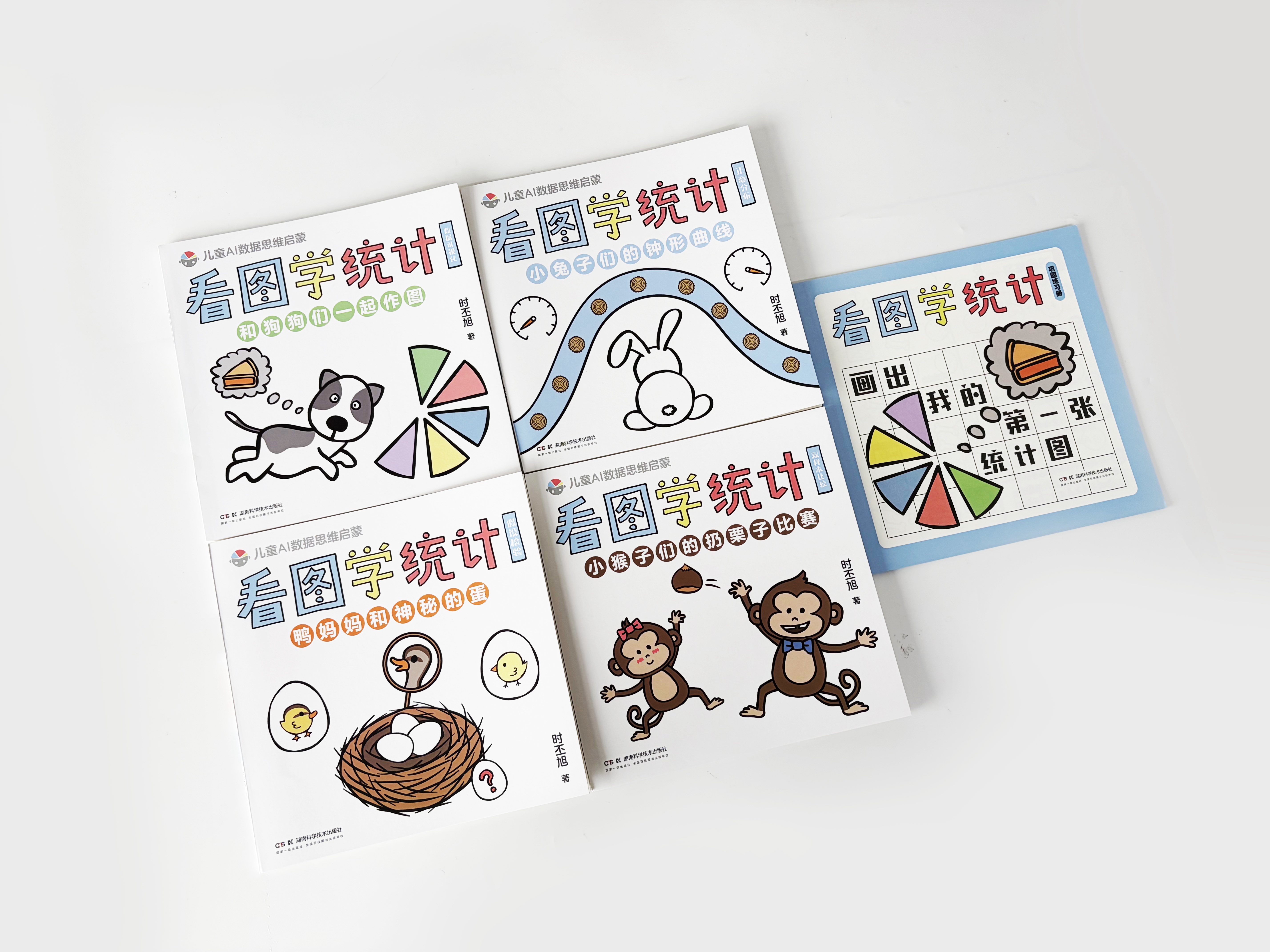
Book 1 · Data Visualization — Charting with Dogs
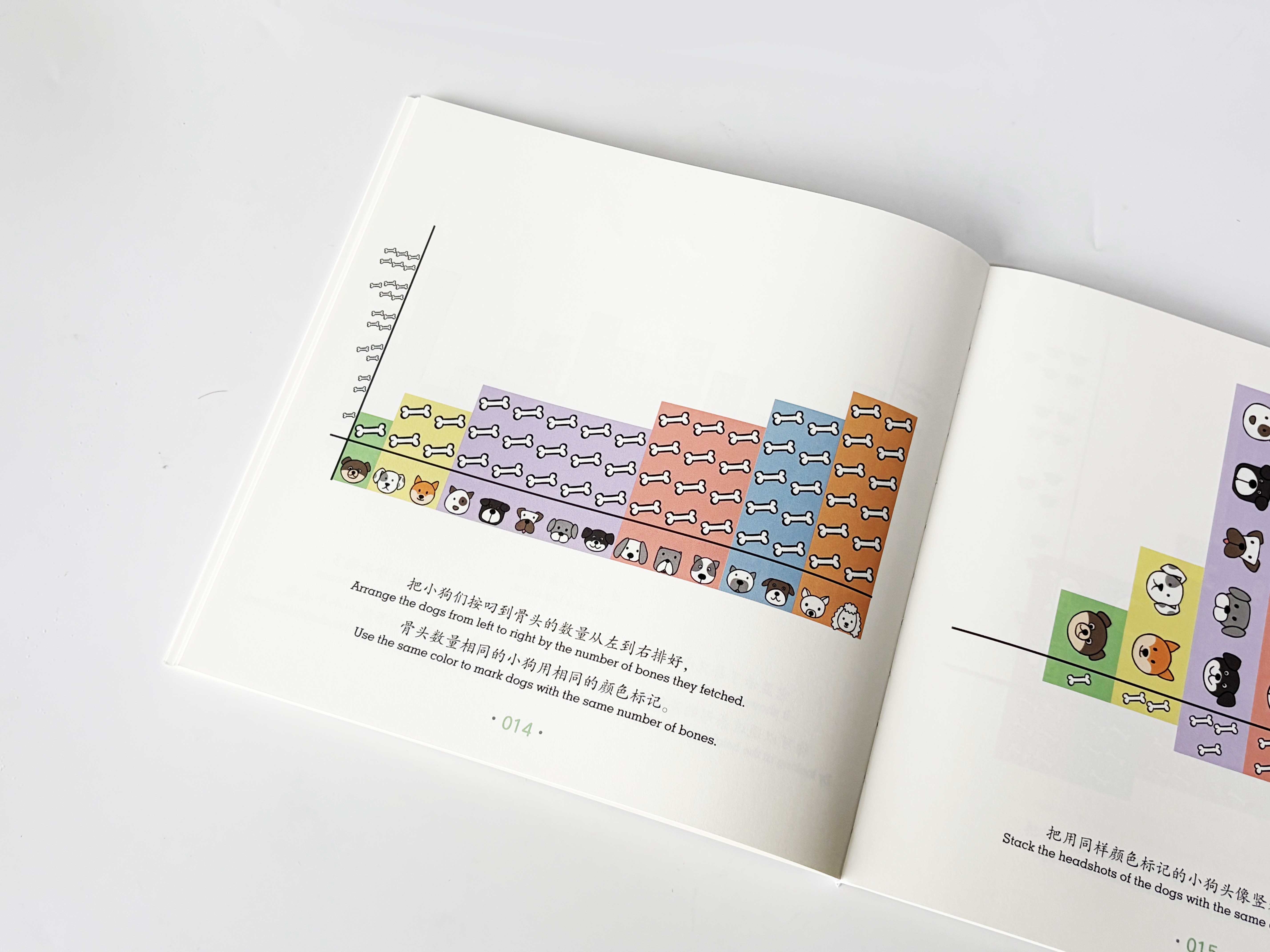
《和狗狗们一起做图》 — A pack of dogs fetching bones becomes the stage for five common chart types: a line chart for trends, a bar chart for comparisons, a histogram for distributions, a scatter plot for relationships, and a pie chart for proportions. Through these playful examples, children learn to use charts as a language for expressing and understanding data.
ISBN: 978-7-5710-3887-8
Book 2 · Normal Distribution — The Bunnies' Bell Curve
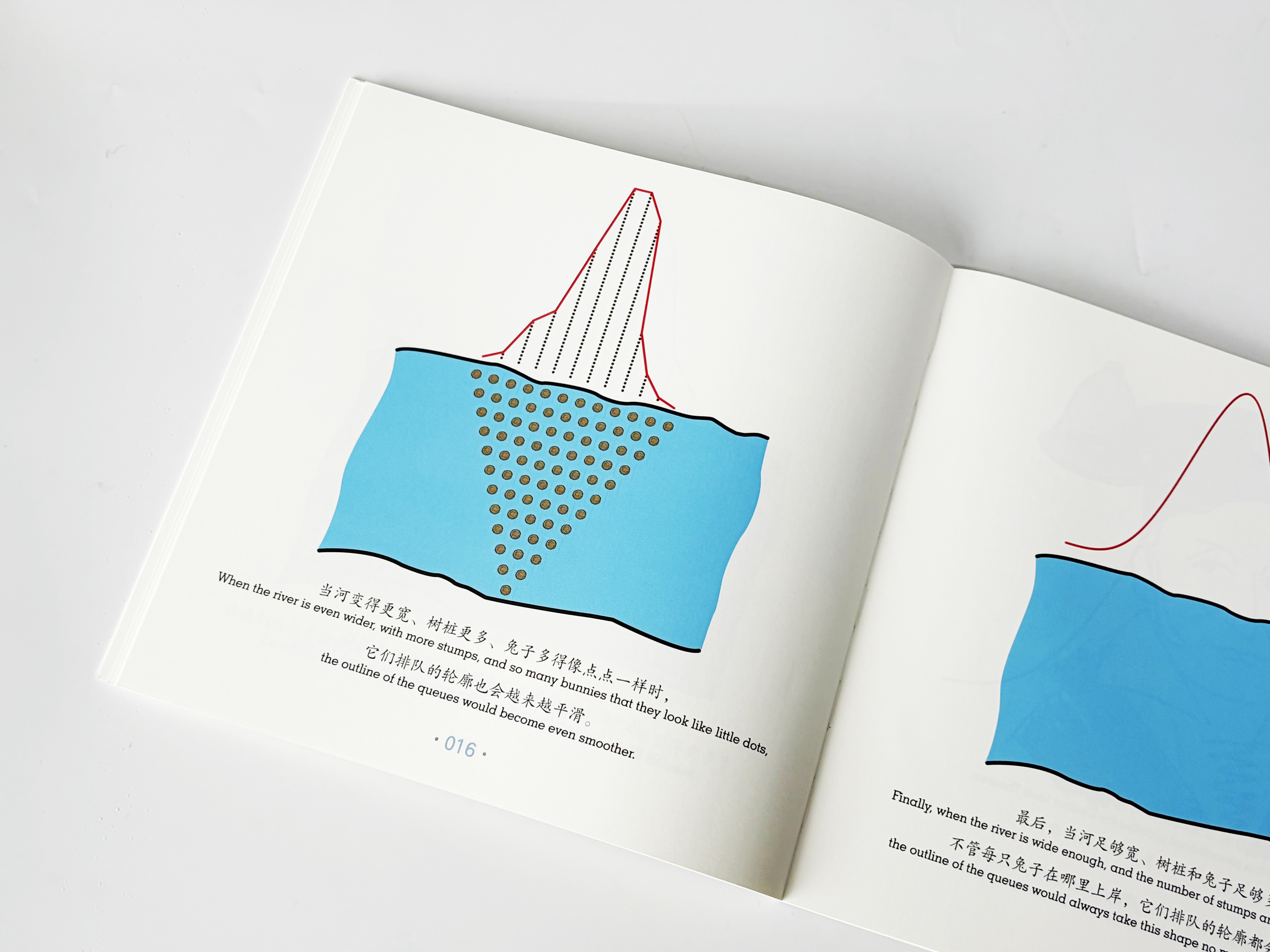
《小兔子们的钟形曲线》 — Bunnies hop across a river on tree stumps, landing in slightly different spots each time. As the landings accumulate, a familiar shape emerges: high in the middle, low on the sides. Heights, running speeds, crop yields — the same curve appears in many places. Understanding it helps children see that in many situations, extreme outcomes are relatively rare while the majority falls in the middle — a perspective that can encourage a more balanced way of seeing the world.
ISBN: 978-7-5710-3888-5
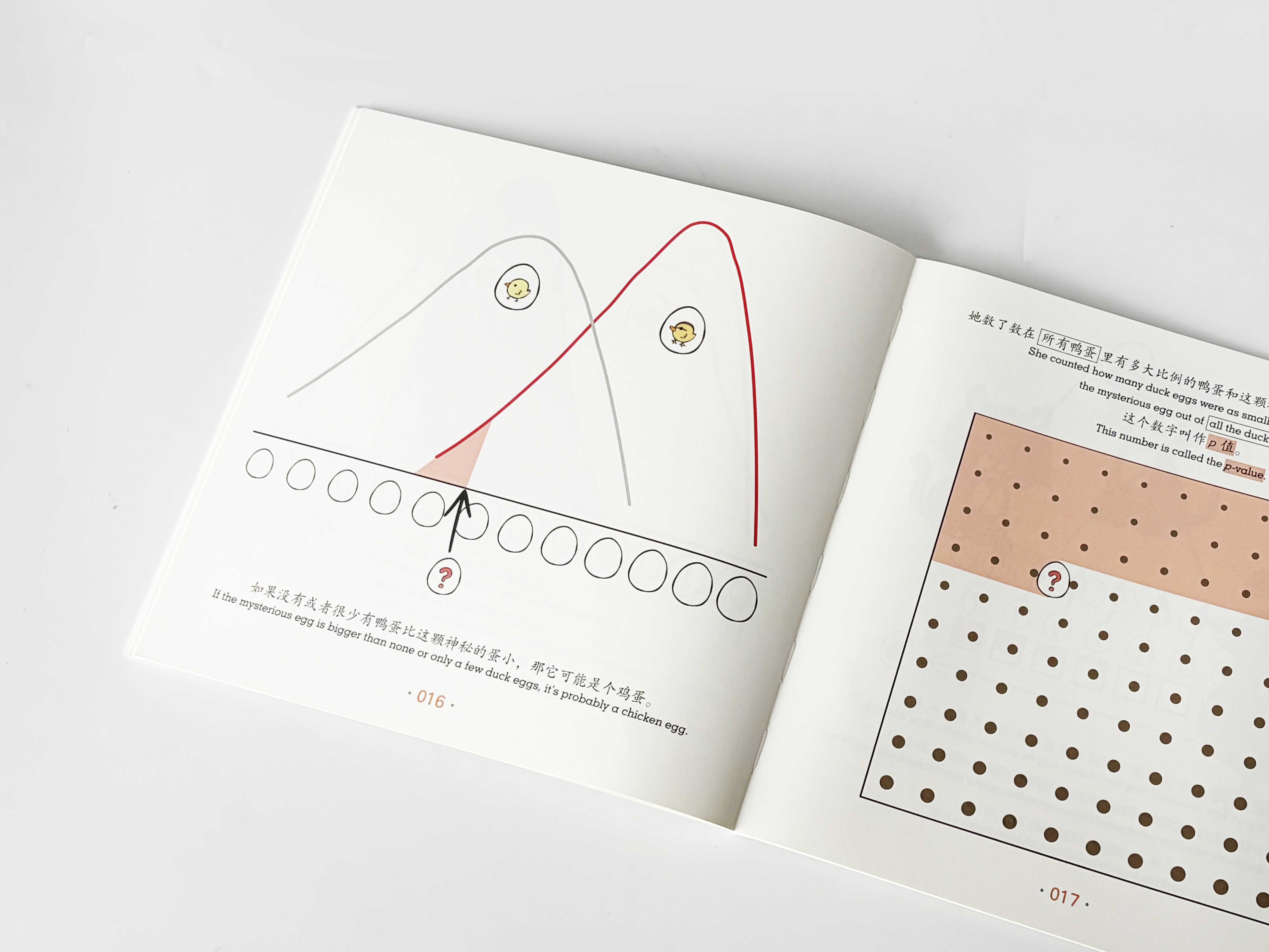
Book 3 · Hypothesis Testing — Mama Duck and the Mysterious Egg
《鸭妈妈和神秘的蛋》 — Mama Duck finds a mysterious egg and wants to know whether it is a chicken egg or a duck egg. She gathers data, builds distributions, and computes a p-value. Concepts such as the null and alternative hypotheses, as well as Type I and Type II errors, unfold within this small mystery. Children learn that when randomness is present, judgments are rarely simply right or wrong, but involve weighing evidence under uncertainty. Statistical thinking, in this sense, is about making informed decisions rather than seeking absolute certainty.
ISBN: 978-7-5710-3889-2
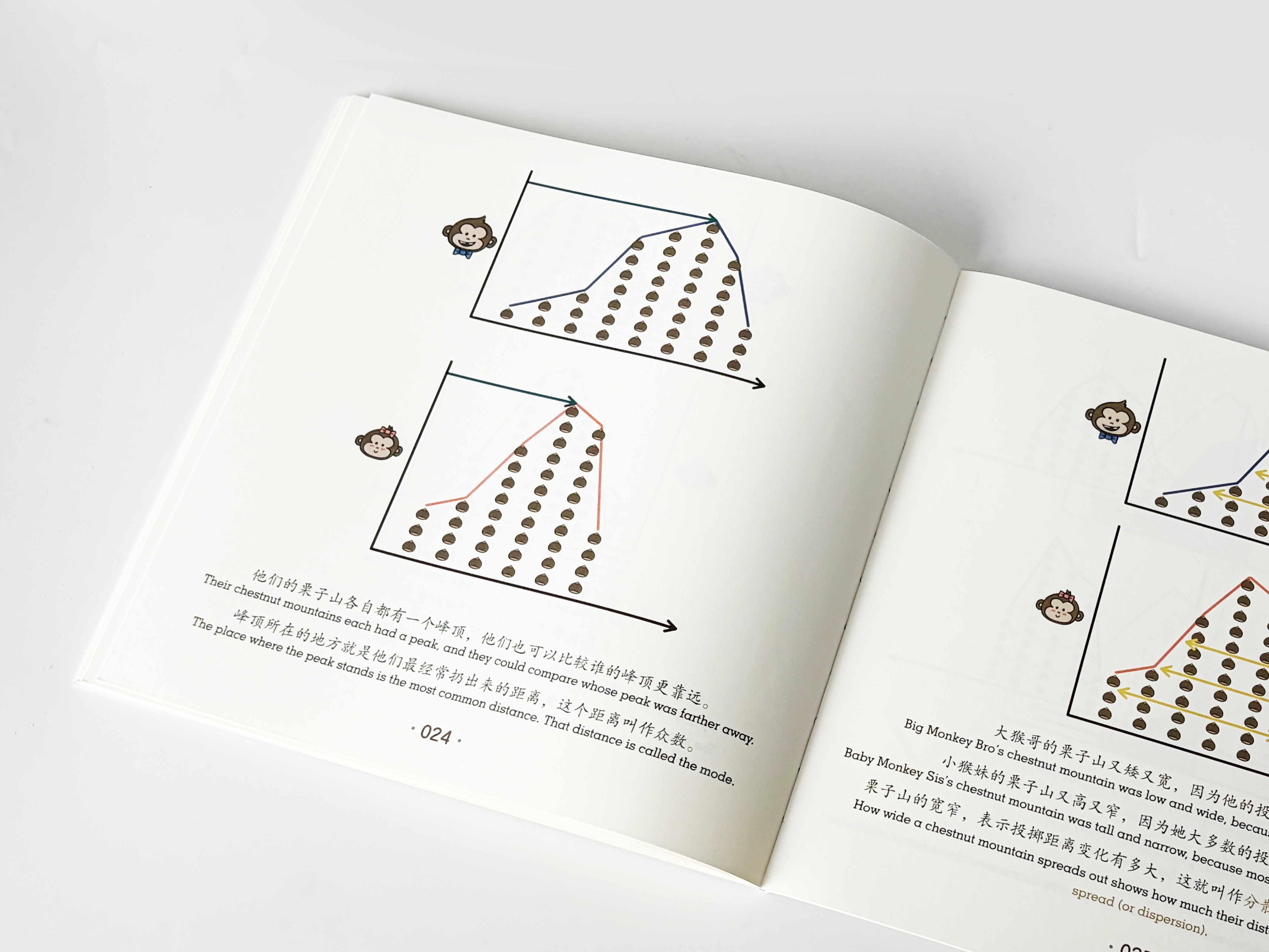
Book 4 · Two-Sample Comparison — The Little Monkeys' Chestnut-Throwing Contest
《小猴子们的扔栗子比赛》 — Big Monkey Bro and Baby Monkey Sis (modeled on the author's two children) hold a chestnut-throwing contest. Each makes many throws with varying distances, so who wins? The maximum captures only the extreme; the mean uses every throw but is sensitive to outliers; the median is more robust; rank sum and average rank offer another perspective; spread and sample size influence the conclusion too. Different statistics can give different answers to the same contest, just as the same problem can often be approached in different ways. Learning how to choose the right approach for the question at hand is itself an important skill.
ISBN: 978-7-5710-3890-8
About the Series
The illustrations were generated with R: every dog, bone, egg, and chestnut was hand-drawn on a tablet and then placed into a statistical chart using the rasterImage() function. This approach preserves coordinate accuracy and reproducibility, since an inaccurate axis could mislead young readers about the quantitative relationship being shown. The books are bilingual in Chinese and English, and each book is accompanied by a Mandarin video in a mother-and-son Q&A format. The book set also includes an activity booklet that invites children to try making their own charts.
The series is available on JD.com, tmall.com, WeChat, and Xiaohongshu — search for 看图学统计 to find it.